

Uncategorized
Patek Philippe Nautilus 5711 Replica Buying Guide: What to Check Before You Buy
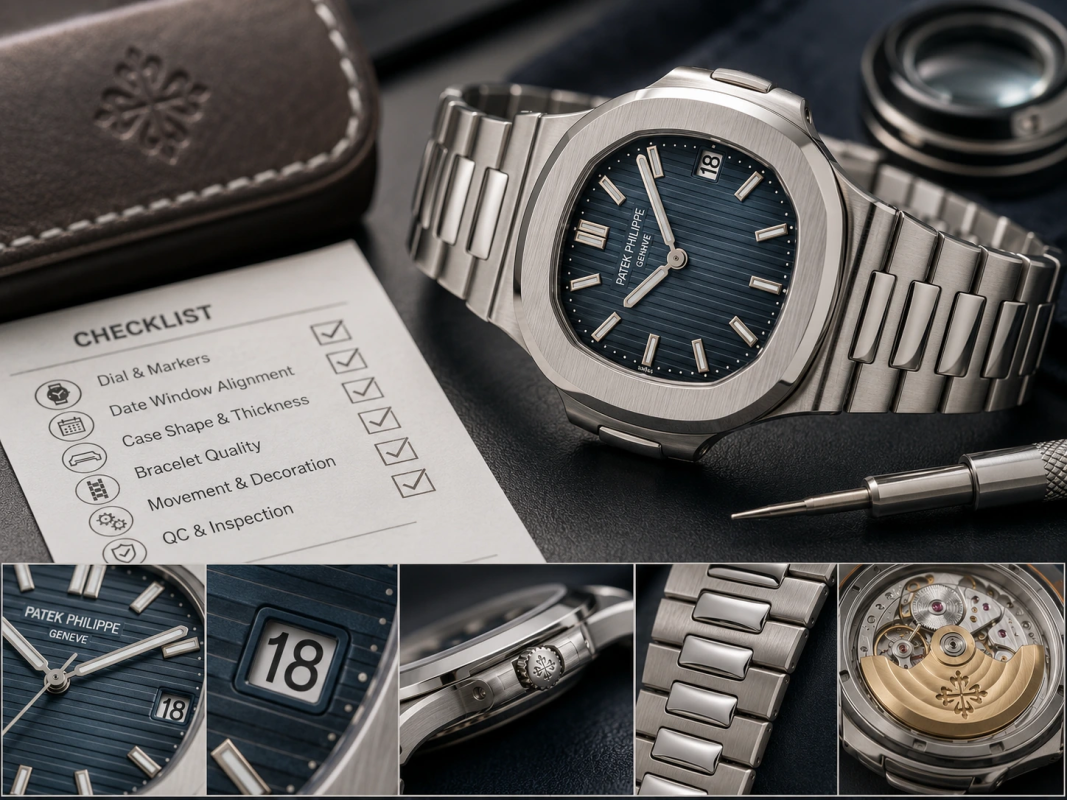
Choosing a Patek Philippe Nautilus 5711 replica can be more complicated than it first appears. The 5711 has a simple and highly recognizable design, which means even small differences in the dial, bezel, case thickness, bracelet, date window, or movement can affect the overall appearance. Different factories may focus on different areas, so buyers should not judge a watch only by its factory name or price. Understanding the key details of the Nautilus 5711 makes it much easier to compare different versions and decide which one better matches your priorities.
Dial Color and Texture Are the First Things to Check
The dial is usually the most noticeable part of any Nautilus 5711. A good replica dial should not look like a flat piece of blue metal. Under different lighting conditions, the color should show some depth and subtle variation, especially on the classic blue-gray version.
The horizontal embossed texture is equally important. The lines should be clean, evenly spaced, and consistent across the entire dial. If they are too deep, too shallow, or uneven, the dial can look noticeably different from the intended design.
Applied hour markers should also be properly aligned. Since the 5711 dial is relatively clean, even a slightly crooked marker can be easy to notice. The Patek Philippe Genève printing should look sharp and balanced rather than too thick or poorly positioned.
When comparing a Patek Philippe Nautilus 5711 replica, clear front-facing photos under natural lighting are usually more useful than heavily edited promotional images.
Date Window and Hand Alignment Matter More Than Expected
The date window at 3 o’clock may seem like a small detail, but it can have a big effect on the overall appearance of the dial.
The date numeral should sit close to the center of the window. Poorer versions may have numbers that sit too high, too low, or too close to one side. The font itself is also worth checking because differences in thickness, size, and shape can become obvious at close range.
If possible, check QC photos showing more than one date. A single-digit date may look well aligned while double-digit numbers reveal problems with the position of the date wheel.
Hand alignment should also be checked. The minute and hour hands should sit correctly over the markers, and the seconds hand should not appear unusually high above the dial. These are small details, but together they contribute to a cleaner and more convincing appearance.
Case Shape, Bezel, and Thickness Define the 5711 Profile
One of the most important areas to examine is the case. The Nautilus is known for its rounded octagonal bezel and relatively slim profile, so incorrect dimensions can quickly change the character of the watch.
A replica may look convincing from the front but noticeably thicker from the side. For this reason, buyers should always ask to see side-profile images rather than relying only on straight-on photos.
The bezel shape should appear balanced, with smooth curves and clean edges. The side extensions, often referred to as the Nautilus “ears,” should also have the right visual proportions. If they are too long, thick, or rounded, the watch can appear wider and heavier than it should.
Finishing is another major factor. Brushed and polished surfaces should have a clear separation. Poor transitions between these finishes can make the case look soft or overly shiny, even when the basic dimensions are reasonable.
Bracelet Quality Has a Major Impact on Daily Wear
The integrated bracelet is one of the defining features of the Nautilus, and it is also one of the areas where quality differences are easiest to feel.
The first links should connect naturally to the case without large gaps or awkward angles. Each link should articulate smoothly, allowing the bracelet to wrap comfortably around the wrist.
Finishing should remain consistent across the bracelet. Brushed areas should have a uniform grain, while polished sections should provide clean contrast without looking excessively bright. Sharp edges or rough machining can quickly reduce the overall wearing experience.
Bracelet noise is another detail worth paying attention to. Some movement between links is normal, but excessive rattling can make the watch feel cheaper than it looks.
The clasp should also open and close securely. Check the engraving, finishing, closing tension, and overall fit. For many owners, bracelet and clasp quality matter just as much as dial accuracy because these are the parts they interact with every day.
Movement Choice Depends on What You Value Most
Movement is often one of the biggest selling points when comparing different versions of a Patek Philippe Nautilus 5711 replica.
Some watches use a reliable base movement combined with decorative plates, while more advanced versions may use a movement architecture designed to look closer to the genuine caliber. These versions can offer more accurate bridge shapes, rotor placement, screw positions, and jewel locations when viewed through the display caseback.
However, movement appearance is only part of the decision.
A more visually accurate movement does not automatically guarantee better long-term reliability. More complicated replica movements can sometimes be more difficult to service, while simpler movements may be easier to maintain.
Buyers who mainly care about wrist appearance may not need the most elaborate movement available. On the other hand, collectors who frequently inspect the caseback may consider movement architecture a much more important factor.
The best choice depends on whether you prioritize visual accuracy, reliability, serviceability, or a balance of all three.
QC Photos Should Be Checked Before Shipping
Even watches from the same factory can have small differences in assembly, which makes quality-control photos especially useful.
Start with the dial. Check the hour markers, logo printing, date position, and hand alignment. Then inspect the bezel and case for scratches, uneven finishing, or visible asymmetry.
The bracelet should be checked for obvious gaps, damaged links, or finishing problems. The clasp should close correctly, while the crown should operate normally when winding, setting the time, and adjusting the date.
It is also worth looking for visible dust or particles beneath the crystal.
A short video can sometimes reveal things that still photos cannot. It can show how the dial reacts to light, how the bracelet moves, and whether the hands and movement function correctly.
There is no need to reject a watch because of microscopic imperfections that are invisible during normal wear. QC should mainly be used to identify obvious problems that could affect appearance, comfort, or function.
The Best 5711 Replica Is Not Always the Most Expensive One
Price alone should not determine which version you choose. A more expensive model may offer an improved movement, thinner case, better dial, or more refined bracelet, but those upgrades may not matter equally to every buyer.
If your main priority is how the watch looks on the wrist, focus on the dial color, bezel shape, case thickness, bracelet integration, and finishing. These details usually have the biggest visual impact during normal wear.
If movement appearance is important, compare the bridge layout, rotor, engraving, and overall architecture through the caseback.
For buyers who want a watch for frequent daily use, reliability and bracelet comfort may be more important than having the most technically ambitious movement.
A good Patek Philippe Nautilus 5711 replica should feel balanced rather than impressive in only one area. Comparing the dial, case, bracelet, movement, and QC together is usually the best way to find the version that suits your expectations.
